Jimmy Lenman
  • Home
  • Contact
  • Talks
  • Writings
  • 翻译
  • Moo!
  • Pictures
  • Links: My Stuff
  • Links: Other Stuff
  • Files
  • Curriculum Vitae
  • Tops
  • Stravaiging
                                                 Question: Is there no way out of the mind? (Sylvia Plath, "Apprehensions")
                                                 Answer: ψυχῆς πείρατα ἰὼν οὐκ ἂν ἐξεύροιο πᾶσαν ἐπιπορευόμενος ὁδόν· οὕτω βαθὺν λόγον ἔχει (Heraclitus, DK B45)


Picture
From 2025-2028 I will hold a Leverhulme Major Research Fellowship for a research project: Moral Knowledge and Democratic Community: An Essay on Ethics and Expertise. I am very grateful to the Leverhulme Trust for this wonderful opportunity.

Picture
"Both Lenman’s and Bramble’s contributions to the book are excellent: thought-provoking, innovative and engaging. In light of these virtues, I highly recommend the book! It should be suitable for anyone with a little bit of background in normative ethics."

Olle Blomberg, Utilitas


Picture
"For a contribution to a book symposium, our focus is, perhaps, relatively narrow. We limit our attention to Lenman’s discussion of the error theory, which we think is both inspiring and on the right track. But we should note that there is a lot in Lenman’s book that is inspiring or on the right track (an inclusive ‘or’). The positive account of moral discourse and thought that Lenman puts forward, for instance, is an intriguing brand of quasi-realism with constructivist or ‘communitarian’ elements. Lenman seems to aspire toward a ‘compleat Humeanism’ of sorts, bringing together broadly Humean-sounding claims that don’t so often go together: both the expressivist idea that moral language has a non-representational function and the idea that somehow the source of normativity is in our desires, feelings and attitudes. Despite the very reasonable length of the book (at around 160 pages), Lenman canvasses a rich range of topics from the error theory to moral responsibility, and from the role of community in metaethics to the constitution of agency. And the discussion is conducted with reference to a refreshing selection of authors, whom one doesn’t so often encounter in works on metaethics (Susan Hurley, Mary Wollstonecraft, Charles Taylor etc.). Also, there are seals seeking to get their hands (‘OK, flippers’) on some fish. Characteristically of Lenman, it is all, of course, a real joy to read." 

Teemu Toppinen and Vilma Venesmaa, Analysis Reviews

​"One of the nice things about being asked to review a book is that it forces you to read a book in its entirety. I am grateful to have read this one. It is engagingly written, full of wit and wisdom, and it makes one think it’s no accident that Humean and humane share all their letters. In reading the book, one feels as though one is sitting down with a delightful tutor having a conversation about metaethics....
The book provides an extremely compelling and uplifting picture of moral community and the metaethics necessary to make sense of it. Even if you don’t share his views, you will come away grateful for the conversation."

Valerie Tiberius, Ethical Theory and Moral Practice


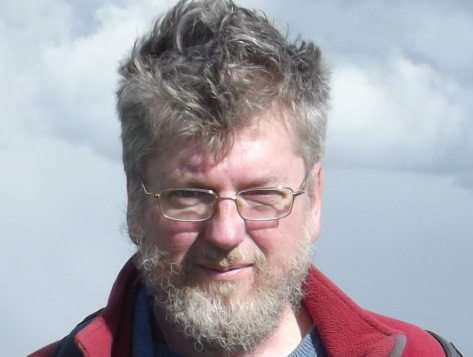
This is the homepage of Jimmy Lenman. Sometimes also known as James Lenman. I'm not fussy.

I work in the Department of Philosophy at the University of Sheffield.

I have taught courses in many areas of philosophy including ethics, political philosophy, epistemology, philosophy of mind, philosophy of language, logic, Plato, Aristotle, Confucius, Edmund Burke, Thomas Paine and John Rawls. 
 
Picture
Before coming to Sheffield, I was a schoolboy in Dundee, Scotland, then an undergraduate student at St Catherine's College, Oxford University, reading Philosophy, Politics and Economics (but not very much Economics), then  a graduate student at St Andrews University studying for an M.Phil. and then a PhD in Moral Philosophy, then a Lecturer at Lancaster University and then a Lecturer then Senior Lecturer at the University of Glasgow. In 2002-2003 I was a Faculty Fellow at the Center for Ethics and the Professions at Harvard University.

Proudly powered by Weebly